Investigating How Regional Licensing Rules Shape Live Game Provider Expansions in Emerging Markets
Gisela Brooks · Aug 25, 2026
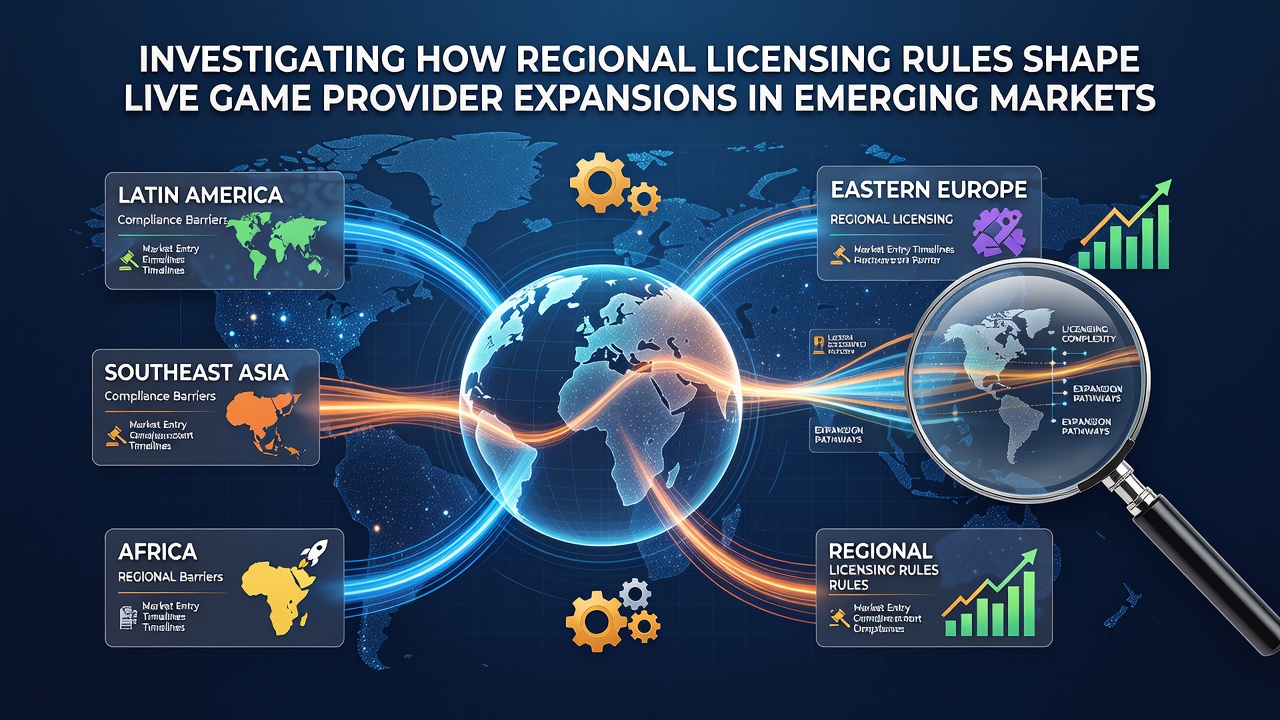
Investigating How Regional Licensing Rules Shape Live Game Provider Expansions in Emerging Markets
Understanding Licensing Frameworks Across Regions
Regional licensing rules establish the legal pathways that live game providers must follow when entering emerging markets, and these requirements often dictate the pace and scale of expansions, since operators need approvals that cover technology standards, local partnerships, and revenue sharing models before they can launch real-time table games or streaming services. Data from regulatory bodies in Latin America indicate that Brazil's updated framework, effective since 2024, requires foreign providers to form joint ventures with domestic entities, which has led several major studios to adjust their entry timelines accordingly.
Observers note that similar patterns appear in Southeast Asia, where countries like Vietnam and the Philippines enforce strict local content rules alongside licensing fees that scale with projected player volumes, and these conditions force providers to integrate regional payment systems early in the development process.
Key Factors Influencing Expansion Decisions
Providers evaluate licensing timelines, compliance costs, and technology mandates when selecting target markets, because delays in approval processes can shift investment priorities toward regions with faster review cycles such as parts of Eastern Europe or select African jurisdictions. Research from the International Gaming Institute at the University of Nevada highlights how licensing in Nigeria demands certified random number generators and audited streaming infrastructure, which adds layers of testing that extend rollout periods by several months.
Yet these same rules create opportunities for providers who secure early certifications, since compliant operations gain priority access to player bases that grow rapidly once legal frameworks stabilize. In August 2026, updates to India's state-level gaming policies introduced clearer guidelines for live dealer integrations, prompting multiple providers to accelerate partnerships with local tech firms to meet data localization requirements.
Case Examples from Emerging Jurisdictions
One study revealed that providers expanding into Colombia adapted their platforms to align with local tax structures tied directly to licensing renewals, and this approach allowed them to maintain competitive margins while scaling live roulette and blackjack offerings across the region. Malta Gaming Authority reports document parallel developments where providers entering sub-Saharan markets must demonstrate server redundancy within approved territories, a condition that influences decisions about where to host streaming operations.

Additional examples show that Argentina's provincial licensing system requires ongoing audits of game fairness and player fund segregation, which has encouraged providers to build dedicated compliance teams rather than relying on centralized global operations. Those who've studied these markets know that such rules reduce the risk of sudden market closures but increase upfront capital needs for smaller studios.
Technology and Compliance Intersections
Licensing conditions frequently intersect with technical specifications, and emerging markets often mandate integration with government-monitored payment gateways or real-time reporting dashboards that transmit transaction data directly to regulators. This setup requires providers to redesign backend systems before launch, since non-compliance can result in license revocation even after initial approval. Evidence suggests that studios investing in modular compliance software have shortened adaptation periods when moving between markets with overlapping requirements, such as those in the Andean region and parts of Central America.
What's interesting is how these technical mandates also affect content localization, because rules in several Asian jurisdictions require language support and cultural adaptations for dealer interfaces to secure full operational licenses.
Conclusion
Regional licensing rules continue to determine which live game providers can sustain growth in emerging markets by setting clear parameters around partnerships, technology, and ongoing oversight. Providers that align their expansion plans with these frameworks gain structured access to new player populations, while those that overlook specific regional nuances face extended delays or restricted operations. Data from multiple regulatory sources confirm that successful expansions hinge on early engagement with licensing processes rather than post-launch adjustments.