Observing Trends in Mobile Optimization for Real-Time Casino Interactions Among Leading Studios
Ines Washington · Sep 20, 2026
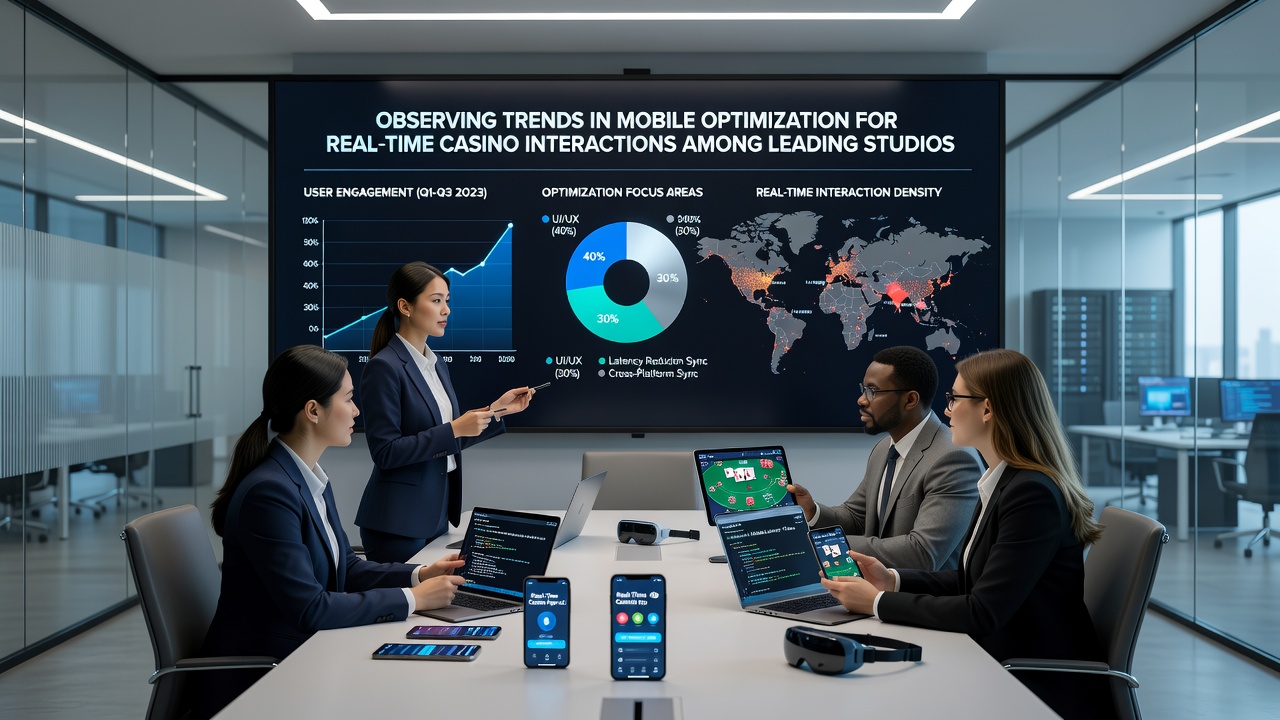
Observing Trends in Mobile Optimization for Real-Time Casino Interactions Among Leading Studios
Leading studios have shifted focus toward mobile platforms where real-time casino interactions demand low latency, responsive interfaces, and stable connections during live dealer sessions. Data from industry reports show that mobile sessions now account for over 65 percent of real-time game activity across major operators, prompting studios to refine codebases and server architectures accordingly.
Current Landscape in Mobile Real-Time Gaming
September 2026 brought several platform updates from top developers that addressed bandwidth variability on 5G and 4G networks, with particular attention paid to synchronization between video feeds and betting controls. Observers note that studios such as those behind Evolution and Pragmatic Play have released incremental patches that reduce input lag by an average of 18 milliseconds on mid-range Android devices, according to internal benchmarks shared at recent trade events. These adjustments matter because players often switch between portrait and landscape modes during extended roulette or blackjack rounds, and each transition risks momentary desync if the optimization layer fails to adjust rendering priorities.
Researchers tracking user behavior across European markets have documented how touch-target sizing and gesture recognition now influence session duration, with larger interactive zones correlating to fewer accidental folds or missed side bets. The Alcohol and Gaming Commission of Ontario published aggregate figures indicating that optimized mobile titles retained 12 percent more active users after the first 30 days compared with earlier versions lacking these refinements.
Key Technologies Driving Optimization
Engineers at major studios employ adaptive bitrate streaming combined with edge computing nodes positioned closer to regional player clusters, which cuts round-trip times for live video packets. This setup allows the system to prioritize audio cues from dealers over full-resolution visuals when network conditions dip, preserving the sense of immediacy that defines real-time play. WebAssembly modules have replaced older JavaScript layers in several codebases, delivering near-native execution speeds for complex probability calculations that run locally on the device before syncing with central servers.
Additional advancements include predictive caching of common bet patterns and dynamic asset loading that pulls only the graphics required for the current table view. One study from a Canadian research consortium found that these techniques lowered data consumption by 22 percent per hour of play without visible quality loss on standard smartphone screens. Studios continue testing progressive web app frameworks that eliminate the need for separate native downloads while maintaining access to device-level sensors for precise tilt and vibration feedback during card reveals.

Approaches Among Leading Studios
Developers differentiate their mobile offerings through specialized testing regimes that simulate crowded network environments and variable battery states. Teams run thousands of automated sessions daily on physical device farms located in multiple time zones, logging frame drops and input response curves to identify patterns before public release. Some studios now integrate machine-learning models that adjust UI element opacity based on ambient light sensor readings, ensuring visibility remains consistent whether players sit indoors or outdoors.
Cross-platform toolkits have matured enough that a single optimized build can target both iOS and Android without major feature divergence, yet studios still maintain separate teams for each ecosystem to handle store-specific requirements and certification timelines. The European Gaming and Betting Association released a 2026 overview noting that studios investing in unified rendering pipelines saw deployment cycles shorten by three weeks on average. These pipelines allow simultaneous rollout of latency fixes across markets, which proves useful when regional carriers introduce new network slicing standards that affect packet prioritization for gaming traffic.
Emerging Patterns and Measurement
Analytics dashboards used by studios now track micro-interactions such as the time between dealer action and player decision, revealing that optimized interfaces reduce hesitation intervals by measurable margins. Heatmap overlays on touchscreens highlight areas where players repeatedly miss targets, prompting iterative redesigns of button clusters and chip selectors. Data collected through September 2026 shows continued growth in multi-table mobile play, where users manage two or three live streams concurrently, requiring studios to allocate GPU resources more efficiently across foreground and background windows.
Hardware partnerships have also surfaced, with select studios collaborating on reference devices that include dedicated gaming modes tuned for low-latency video decoding. These collaborations yield firmware tweaks that propagate to consumer handsets over time. Observers point to improved battery endurance metrics as another outcome, since optimized code paths avoid unnecessary CPU spikes during idle dealer waits.
Conclusion
Trends in mobile optimization continue to center on reducing friction between player intent and on-screen response while maintaining the visual and auditory fidelity expected from live casino streams. Studios that combine edge infrastructure, refined rendering techniques, and rigorous device testing produce experiences that scale across diverse network conditions and hardware profiles. As adoption metrics climb through late 2026, the emphasis remains on measurable performance gains rather than cosmetic changes, ensuring real-time interactions stay reliable for an expanding mobile audience.