The Role of Cultural Adaptations in Designing Dealer Interactions for Global Audiences in Streaming Table Formats
Gisela Brooks · Oct 4, 2026

The Role of Cultural Adaptations in Designing Dealer Interactions for Global Audiences in Streaming Table Formats
Streaming table formats have expanded across international markets since the early 2020s, and cultural adaptations now form a core part of dealer interaction design. Providers adjust greetings, pacing, and visual cues to align with regional expectations while maintaining consistent game rules. Data from multiple operators shows that localized dealer behavior correlates with higher session retention rates in targeted regions.
Language and Greeting Protocols Across Regions
Dealers in streaming environments receive scripted phrases calibrated for specific audiences, yet the delivery varies by cultural context. In markets where indirect communication prevails, operators train staff to use softer invitations rather than direct prompts. Researchers at the University of Macau documented how Mandarin-speaking dealers incorporated polite particles and extended pauses that matched viewer preferences in East Asian streams during 2025 testing phases.
European audiences often encounter faster verbal exchanges with clear calls to action, whereas Latin American viewers respond to warmer, more conversational tones according to internal metrics shared by several studios. These adjustments occur without altering core game terminology, which remains standardized to satisfy regulatory requirements.
Gesture and Body Language Modifications
Physical signals carry different meanings depending on the viewer base, so training programs now include region-specific modules. One studio operating multiple Asian-facing tables reduced hand gestures that could appear abrupt and replaced them with slower, open-palm movements after viewer feedback sessions. In contrast, North American streams retained more energetic motions that aligned with established broadcast norms in that market.
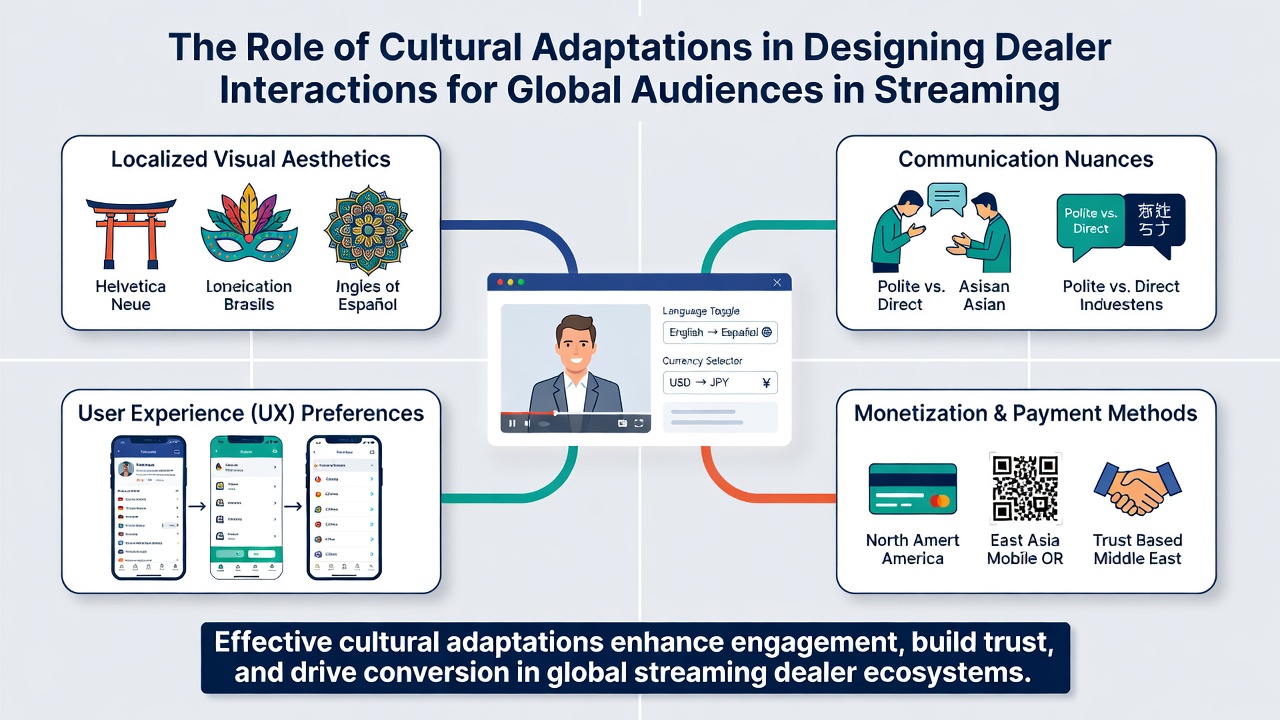
Observers note that eye contact duration also receives attention during preparation. Shorter, intermittent eye contact appears in some Middle Eastern and East Asian productions, while sustained direct engagement remains standard for Western European and Australian feeds. These choices stem from viewer analytics collected across time zones rather than assumptions about preference.
Timing, Pacing, and Cultural Event Integration
October 2026 schedules incorporated adjustments around major regional holidays, with dealers acknowledging events such as Mid-Autumn Festival in relevant streams through brief visual references or altered music cues. Australian and Canadian regulatory filings from the same period required operators to document how cultural timing affected session length and player engagement patterns.
Providers coordinate dealer shifts with global time zones so that local greetings match the actual time of day for the primary audience. A table serving Japanese viewers during evening hours uses different opening remarks than one aimed at North American afternoon viewers, even when the same dealer appears on both feeds through separate streams.
Regulatory and Compliance Considerations
Authorities in multiple jurisdictions require evidence that dealer interactions do not inadvertently favor one cultural group over another. The Alcohol and Gaming Commission of Ontario and the Nevada Gaming Control Board both request localization reports that detail training materials and viewer complaint logs. These documents help confirm that adaptations remain within permitted promotional boundaries.
Industry groups such as the European Gaming and Betting Association have published guidelines on cultural sensitivity in live content, and several major providers reference these when updating dealer protocols. Compliance teams review proposed scripts and gestures before implementation to avoid regulatory issues.
Technical Implementation and Platform Tools
Modern streaming platforms allow real-time subtitle overlays and alternate audio tracks that support simultaneous cultural adaptations. Dealers wear earpieces that deliver region-specific cues during multi-audience broadcasts, while production software switches background elements or on-screen text depending on the feed destination.
Analytics dashboards track engagement drops after specific phrases or gestures, enabling rapid iteration. Studios that implemented these tools reported measurable improvements in average watch time across non-domestic markets by mid-2026.
Conclusion
Cultural adaptations in dealer interactions for streaming table formats rely on data collection, regulatory alignment, and iterative training rather than broad assumptions. Providers that maintain detailed localization records and adjust based on regional metrics continue to expand their global reach while meeting compliance standards across jurisdictions. The process remains ongoing as new markets open and viewer preferences shift over time.